Solo senior engineer · London

I build the systems businesses run on. And the AI layer on top.

ERP, internal tools, and production AI agents. That includes the approval layer deciding which agent actions run on their own and which wait for a person to sign off.

Usually a business of 10 to 200 people, running on a legacy system, a lot of spreadsheets, and two or three people who know how everything actually works.

Shipping production software
7 yrsShipping production software
Systems in production
3Systems in production
Agent tools behind one permission layer
100+Agent tools behind one permission layer
Actions that always need human sign-off
34Actions that always need human sign-off

Selected work

The work

Three systems, each designed and built end to end, each in use by a real business today.

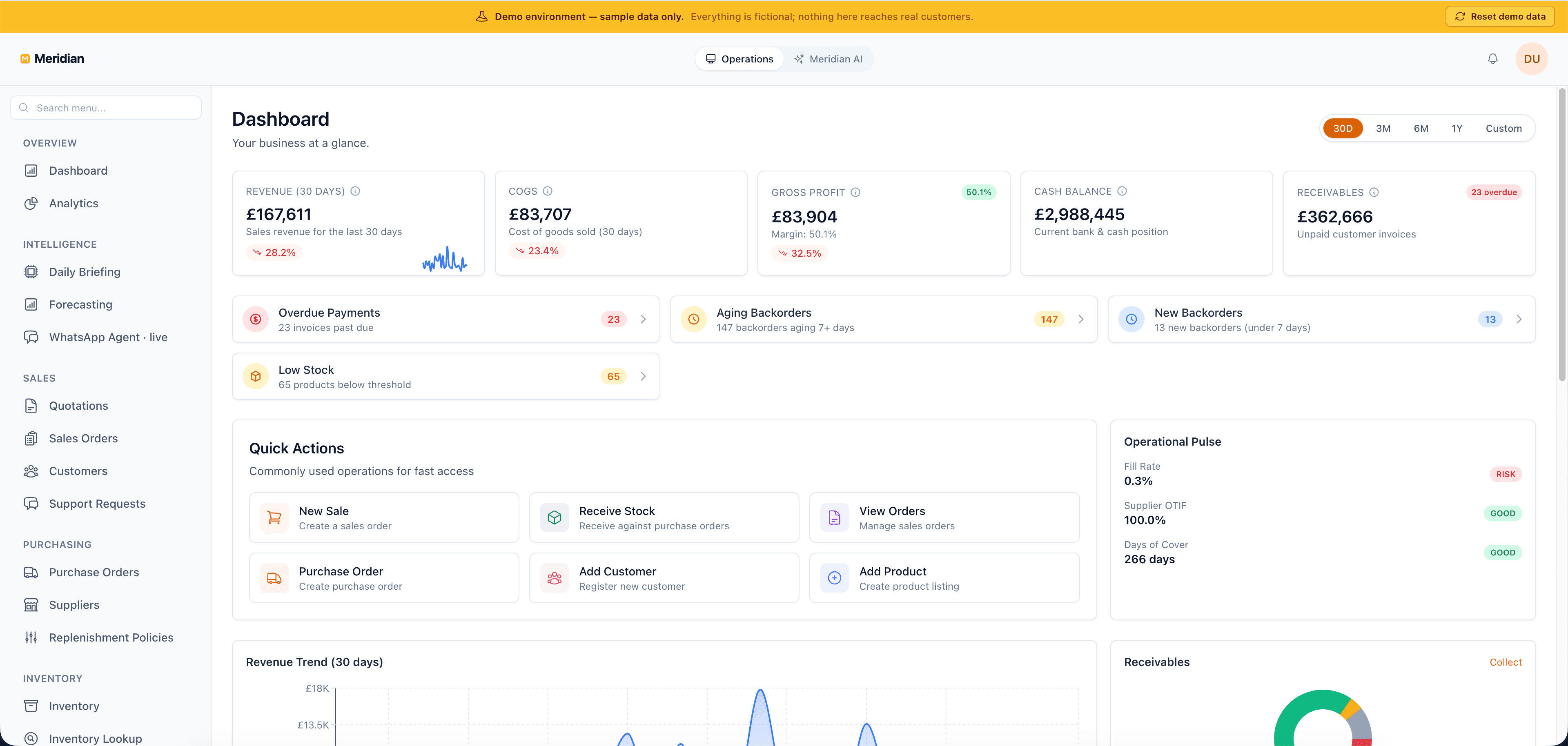
ERP and AI agent layer for a live B2B trading business

The operational system the business runs on: inventory, sales orders, purchase orders, customer credit, supplier terms, and the accounts that tie it together.

Then an AI layer on top. 100+ tools exposed over MCP so an agent works through the same rules and permissions a person would, not a separate back door. 34 of those tools are classified high risk and require a human approval step. Unrecognised actions fail closed rather than running.

Built and operated solo.

Stack

PythonFastAPIPostgreSQLNext.jsTypeScriptMCPClaude API

Demo environment, sample data only. Click any screenshot to view it full size.

“Mohammad built the system our business runs on. Inventory, quotations, sales orders, purchasing and accounts all sit in one place that he designed, built and still operates himself.

He works alone and he works fast. He also built the AI layer on top of it, including the approval step that means nothing touching money goes through without a person signing it off.

He does not disappear when something breaks. That matters to me more than anything else.

I would work with him again.”

CEO, B2B trading business

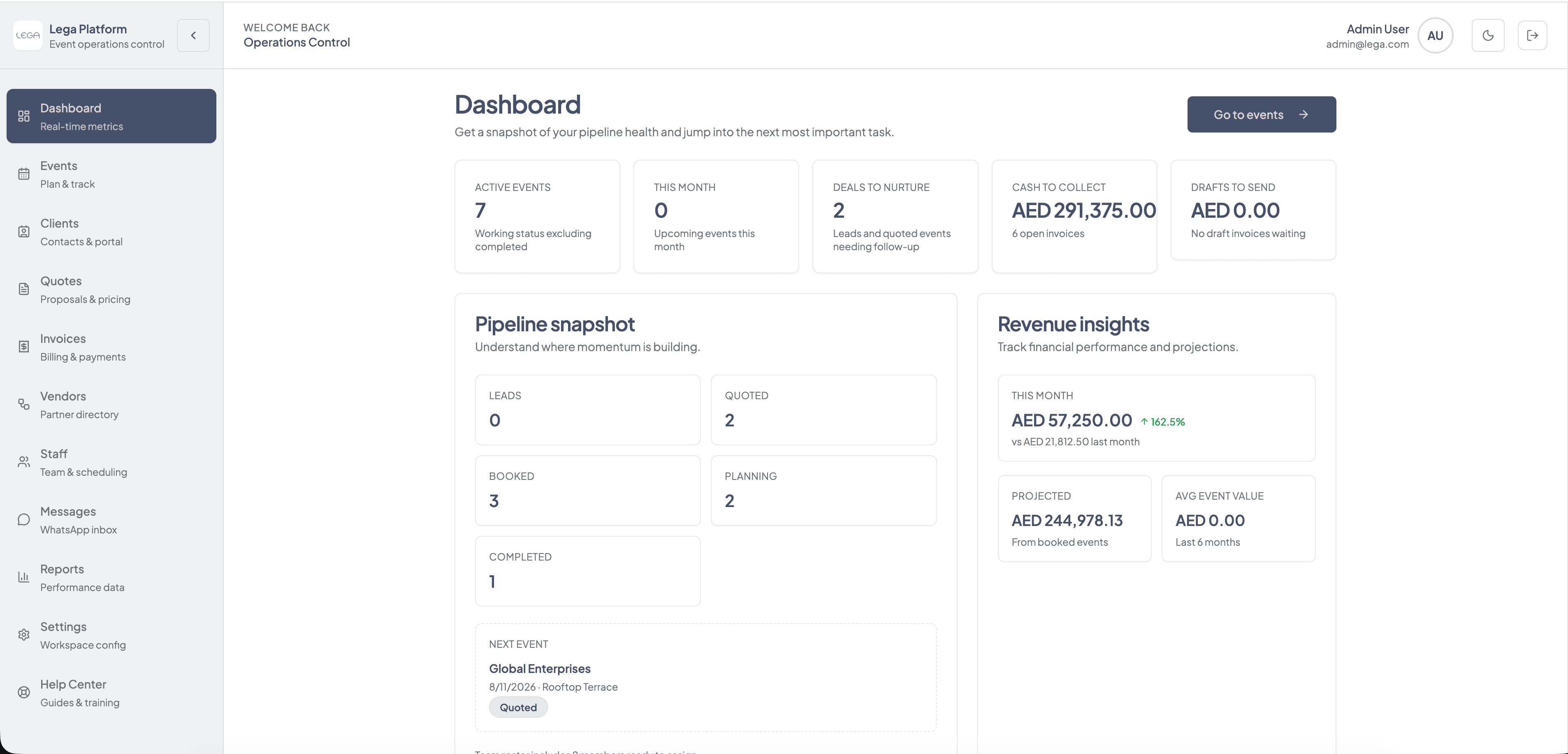
Lega: event-management ERP, live in Dubai

A full vertical ERP for event businesses: events, clients, quotes, invoices, vendors, staff and reporting, with an integrated WhatsApp inbox, multi-currency billing and bilingual English/Arabic.

Stack

Next.js 15TurborepopnpmTypeScript

Click any screenshot to view it full size.

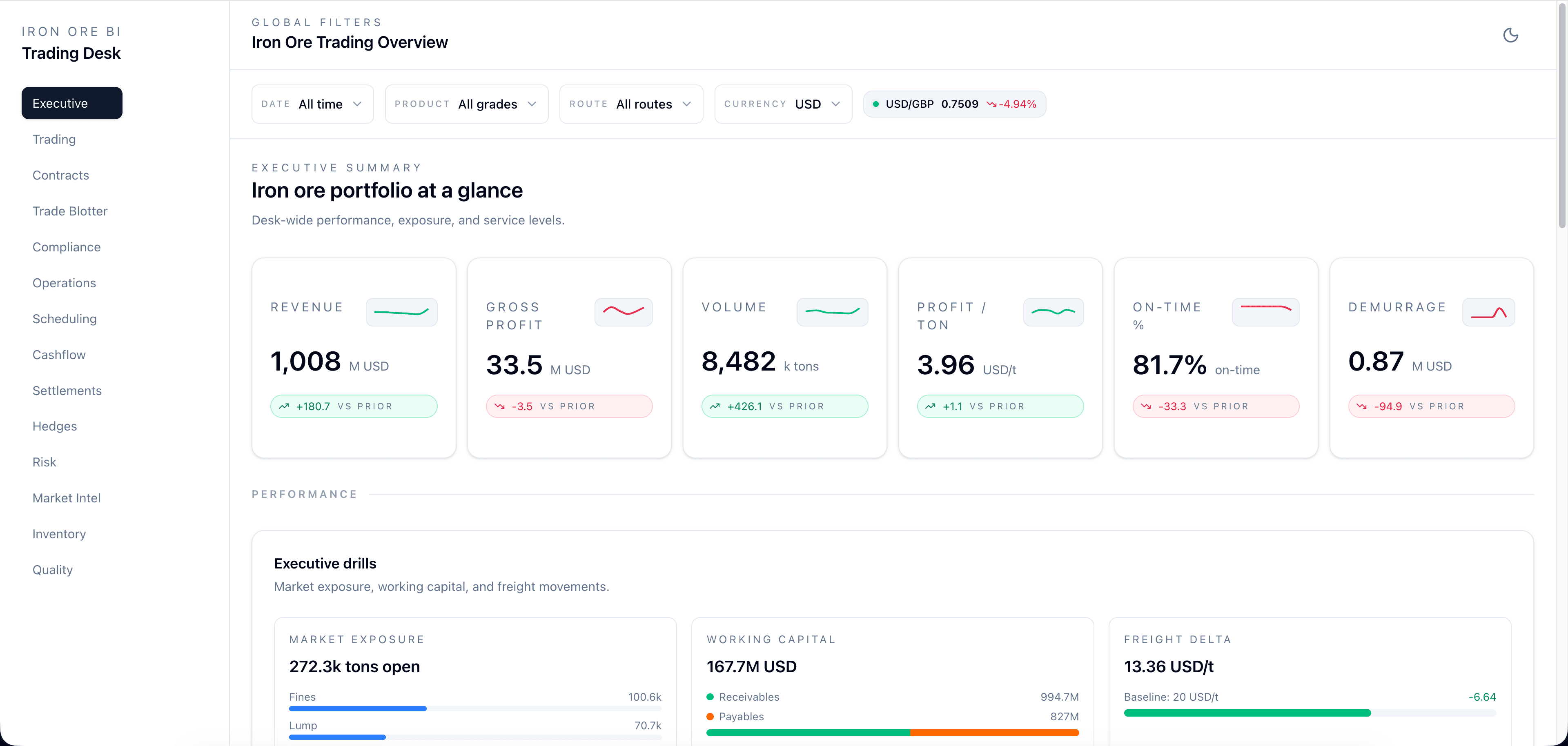
ATH: commodities trading BI platform

Executive, trading, operations and risk dashboards with KPIs, P&L and scenario analysis, plus an AI knowledge base used as a thinking partner for trading decisions.

Stack

Next.jsReactTypeScriptDrizzlePostgresRecharts

Click any screenshot to view it full size.

Judgement

How I decide what to automate

Not everything should be an agent. Most of what looks like an AI problem is not one.

When rules and inputs are predictable

Deterministic software

Cheaper, faster, and it never surprises you. Most of what looks like an AI problem is solved here.

When the path varies case to case

An agent

The objective is clear but the inputs, the route, or the actions required change every time.

When the decision cannot be undone

A human in control

Real ambiguity, real accountability, or consequences that are irreversible. The system prepares; a person decides.

Deciding which is which, step by step, is most of the value. Getting it wrong is how an AI project ends up in production doing something irreversible.

Method

How I work

Three things have to be true before an AI system can carry real responsibility. Each one earns the right to the next.

Audit

Find the workflow worth rebuilding

Map how the work actually happens, not how it is documented. Pick one workflow, define what the system may and may not do, and quantify what fixing it is worth. You get one operating map: current state, future state, the selected use case, the boundaries, and the expected value.

Evals

Prove it works before it touches anything real.

A set of real cases with known-good answers: the normal one, the edge case, the ambiguous request, the one with missing information, the high-risk action. Then a pass rate, named failure categories, and written rules for when the system must stop and escalate to a person.

Deployment

Make it work inside the business

Build over the systems you already have rather than starting with a replacement project. Test in a controlled environment first. Start with the smallest useful action and widen the system's authority only after it has earned it.

In practice that runs on a short clock.

Week one

Embed

I work alongside your team, not from a brief. By the end of the first week I know how work actually moves through the business, where it stalls, and which single thing is worth building first.

Weeks two to four

Ship something real

A working system in production, used by real people. Not a prototype and not a slide deck. You accept it before anything else starts.

Then

The next one

Same cycle, next problem. Documentation and training are always in scope, so your team can run what I build without me.

Commercially: fixed price for a first scoped piece, milestones after that, or a monthly retainer for ongoing work.

Scope

What I do not do

  • Not a generic AI tools audit
  • Not a list of software recommendations
  • Not prompt-writing advice
  • Not a theoretical transformation strategy
  • Not a solution that assumes every system can simply be connected
  • Not more tools without a clear operational benefit

Before recommending anything new, I look at whether better use of what you already own solves the problem.

Guardrails

Security and governance

Defaults every system I build starts from, not add-ons negotiated later.

  • Separation between clients
  • Role-based access
  • Control over what reaches an external AI service
  • Human review before anything is published or sent
  • An audit trail

Where an integration is not permitted by a client's own security policy, the answer is a practical alternative, not a workaround.

Background

About

7 years building and shipping production software as a founder across ERP, fintech, e-commerce and consumer mobile. I have owned the whole lifecycle: architecture, build, deployment, and everything that breaks afterwards.

I work solo. No account manager, no handoff. You talk to the person writing the code.

Company
Atlasvision Innovations Ltd, a UK limited company
Base
London, United Kingdom
Experience
7 years shipping production software
Domains
ERP · Fintech · E-commerce · Consumer mobile
Model
Solo. Architecture through deployment.

Contact

Tell me what your business runs on.

And what keeps breaking. If it is something I should build or fix, I will say so. If it is not, I will tell you that too.

+44 7983 873 644
71-75 Shelton Street, Covent Garden, London